It’s an exciting day for viewing wildlife at Kartchner Caverns State Park! We thought seeing deer here was exciting but much more was in store for today.
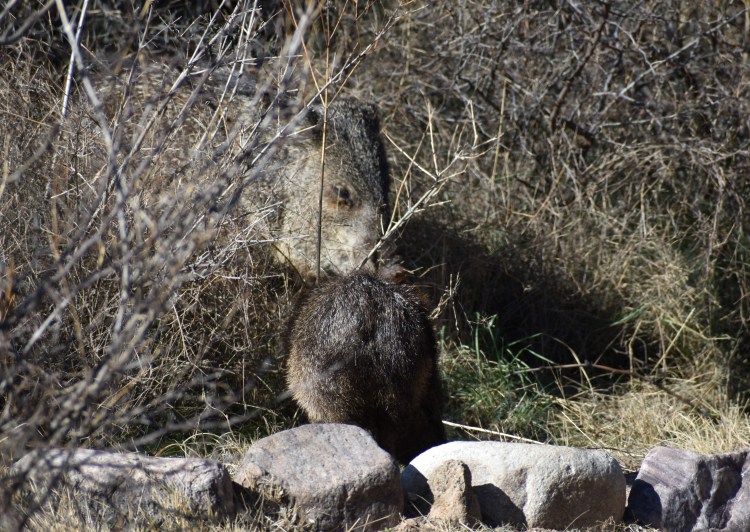
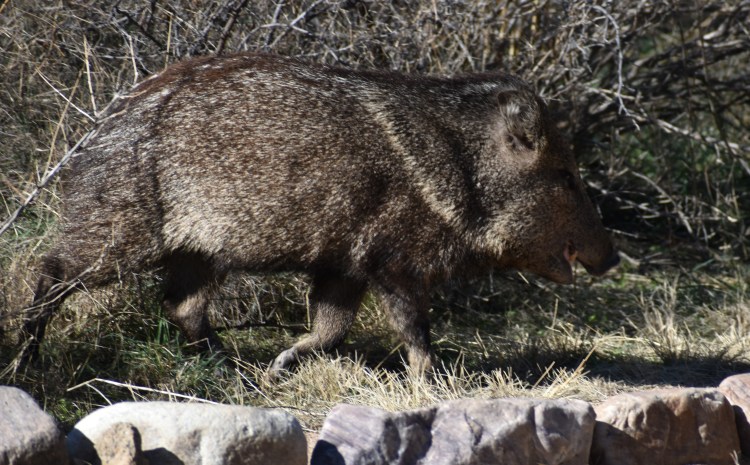
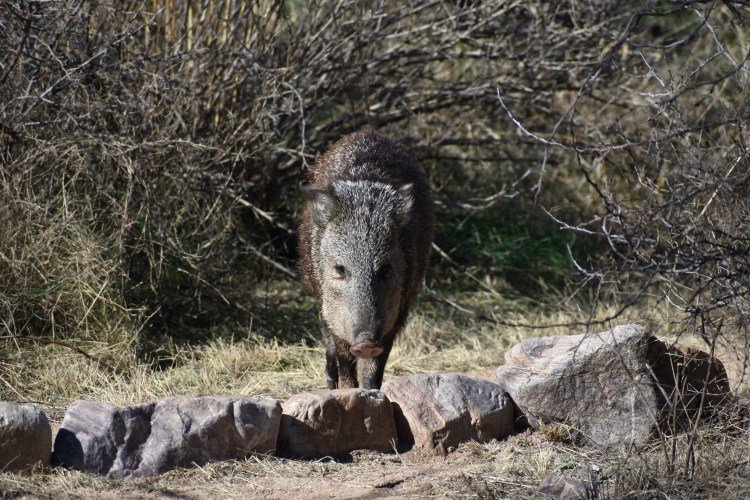
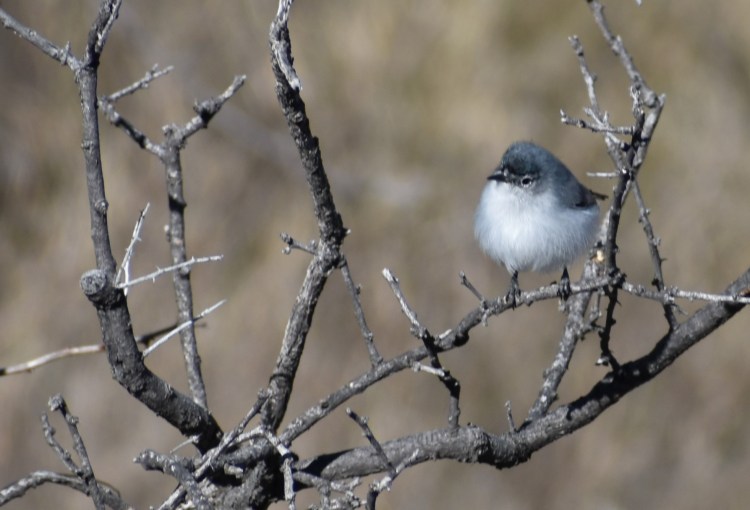
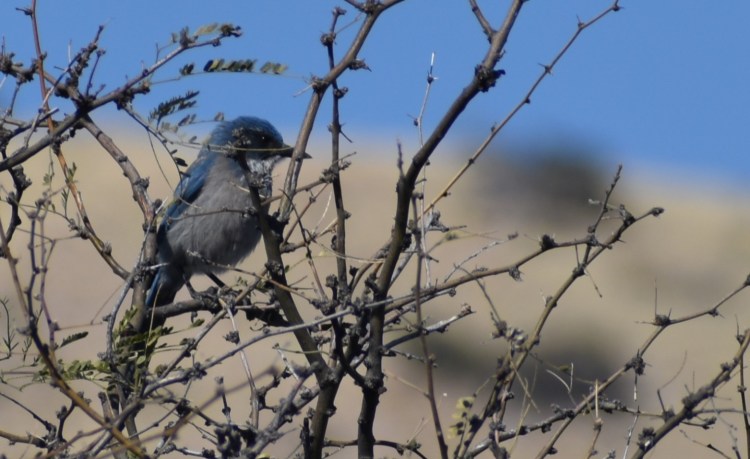
Ron took a hike mid-morning with camera in tow. His plan was to capture some bird photos and he wasn’t disappointed, getting photos of 2 new species. Walking the Foothills Loop, he saw something in the brush ahead and stopped to get a better look. There, not far ahead, was a group of wild Javelinas. Groups are called squadrons and tend to have 6 to 9 animals in it. They were in a brushy area, but he could see them and took a few photos, then they stepped out into the path where he got some great photos. He was thrilled to see them and so glad to get some photos. One of the larger ones, started to step towards him and he did not move for a few minutes, then they moved on into the brush.
Javelinas are medium-sized animals that look similar to a wild boar. They have mainly short, coarse salt and pepper colored hair, short les, and a pig-like nose. They have long, sharp canine teeth which protrude from the jaws about an inch. Each group has a territory which includes their sleeping and feeding areas. They communicate with their own family group and other groups, using sounds and smells. They are classified as herbivores, eating a variety of native plant foods such as agave, mesquite beans, and prickly pear, as well as roots, tubers, and other green vegetation. However, if the opportunity presents itself, they will also eat lizards, dead birds, and rodents. The main predators of Javelina are mountain lions, humans, coyotes, bobcats, and jaguars. They stand about 2 feet tall and can weigh between 35 to 55 pounds and are 3 to 4 feet long. Adult females can give birth anytime during the year and their young are called ‘reds’ due to the red color of their hair.
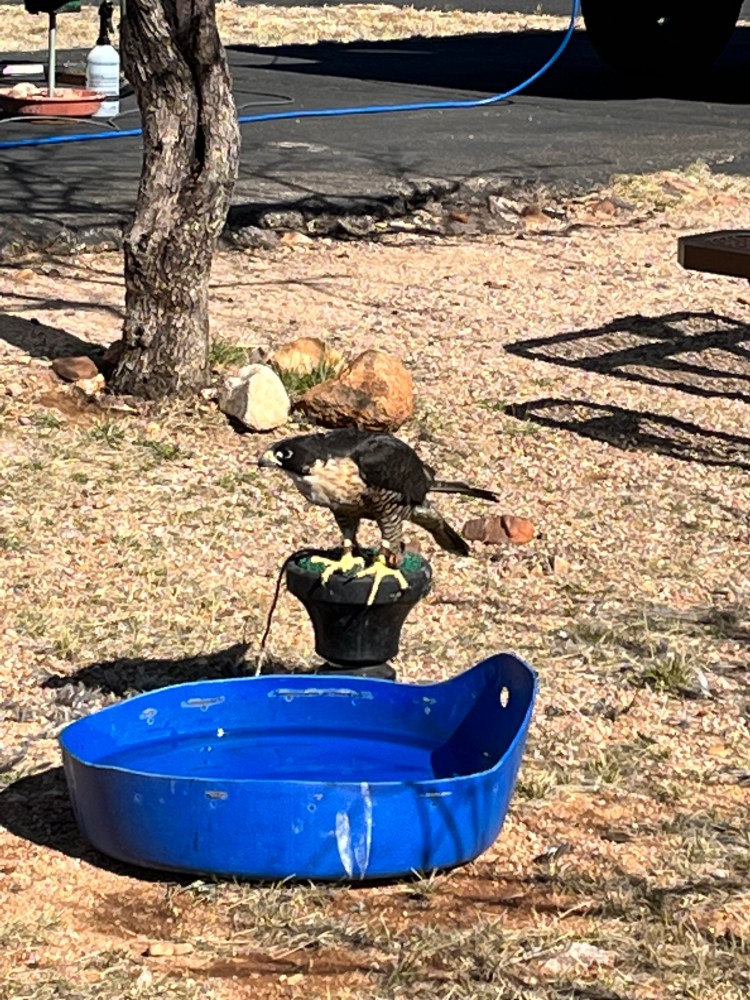
Yesterday, we were on the phone to Joe and Shannon, when I noticed a man nearby with what looked like a hawk on his arm. Today we saw him again, and it was definitely a hawk, or rather a Falcon. Ron went over to check it out and spoke with the camper, a fellow Airstreamer. The Falcon is his hunting partner, along with a small black dachshund who also travels with him. The dachshund assists the Falcon by flushing out rabbits for the Falcon to catch. The Falcon was giving itself a bath in a small tub and then sat on a post where it preened and dried its wings. He’s had the Falcon for several years, getting her when she was very small. Currently they are not hunting because of a flu that ducks are getting that can kill the bird of prey. Falcons can live to 25 years of age, but they can be killed by Golden Eagles, Coyotes, or by an accident.
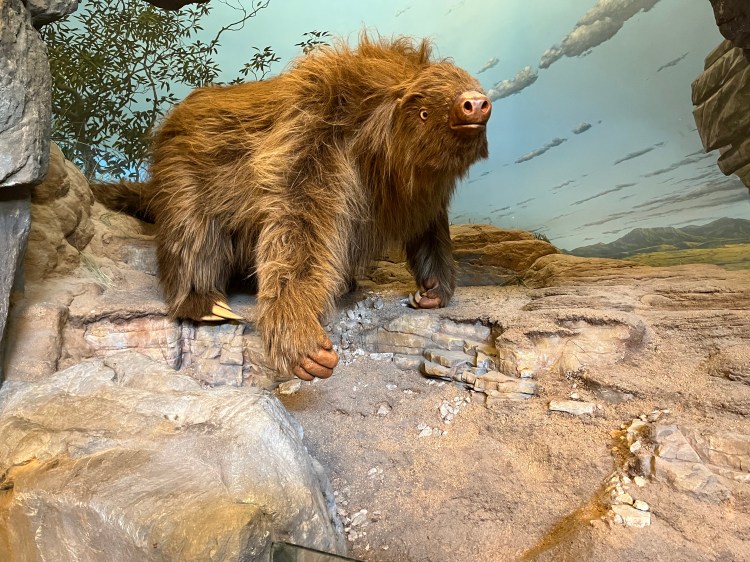
The park has a Discovery Center here and we decided to check it out today. They have an amazing display of prehistoric animal bones and replicas, along with information and tools about the discovery of the Caverns in the 1970s. One of the bones discovered in the caverns were the fossil remains of a Shasta Ground Sloth, and they have a large replica on display.
The land was originally owned by the Kartchner family, and 2 men were exploring the area, when they came across the cave. They began explorations of the cave, sharing their findings with the owners but keeping it secret from anyone else for 14 years. The land was eventually transferred to the State of Arizona, becoming public land and public knowledge about the caverns. The State added walkways and lighting to make the caverns accessible to the public. There is now a trolley bus that travels from the Discovery Center to the Cavern entrance and is kept very busy.
 2025 Airstream Travels